

Social selling with social media
 Increasingly, small businesses want to understand how to leverage social media to increase sales. In previous topics, we’ve discussed methods for creating a social media marketing strategy and using metrics to measure the return on your social media investment. Having a plan or roadmap should always be the first step in any marketing initiative including social media.
Can social media be an efficient, cost-effective channel for finding new customers and selling to business clients?
By now, you’ve probably heard the term social selling (or Sales 2.0). Social selling is about engaging prospects on their terms. It involves learning their marketing, communication, and buying preferences and then positioning yourself to be of value. Social selling (and social media) is not about blasting offers in your tweets and posts. With social selling, you need to recognize that the buying process is controlled by a better informed and more connected customer. Keep in mind, sales still remains a relationship-driven business. The concept of prospect networking through social media enables sales professionals to learn about and connect with potential customers. More importantly, they can tailor sales information and product specs to accommodate the needs and concerns of each individual rather than the mass – enabling relevance throughout the sales cycle.
The amount of prospect information available has increased the need for comprehensive sales intelligence. This generally brings together both traditional data and social media. It can be very beneficial for sales professionals to leverage the social web to simply listen, engage, and add value to the customer conversation. Being in the right place at the right time can create the top of mind status needed when the prospect is ready to buy.
Social media outlets are great places for starting conversations, but they’re not the only place to have them. When the time is right, take the conversation offline. With all of the modern conveniences and technical advances, still nothing can replicate the power of a face-to-face meeting.
The challenge with prospect networking and social selling is that it requires a lot of time and daily commitment. It’s impossible to automate messaging and conversations through social media. While many sales professionals don’t have interest in adding another “to do” item to their daily routine, finding the right balance is key. Each individual needs to assess their industry, audience, product, positioning, and price to form a strategy that fits their business and equally as important – their schedule.
If you have comments or questions, we’d love to hear from you. If you’d like more information on developing effective strategies for social selling, please contact us.
 As Facebook continues to roll out new features and functionality, it’s important to be aware of what these changes are and how they may affect your use. While many people have been buzzing about the Facebook Timeline, it is scheduled to roll out over the next several weeks. For those who can’t wait, this article walks you through the 8 steps to
  Facebook and social media are great outlets for people to vent with friends. People go online to complain about the weather (especially here in Western New York), sports teams, a bad day, boredom, etc… but what are the rules of the discussion? Are there any topics that are off limits – politics, religion, or personal matters?
 Is it wise to start a business endeavor without a plan? Most people wouldn’t build an office before they determined what their business would actually do. Without a strategy there is simply no structure, no clear objectives and no real way of determining its success.
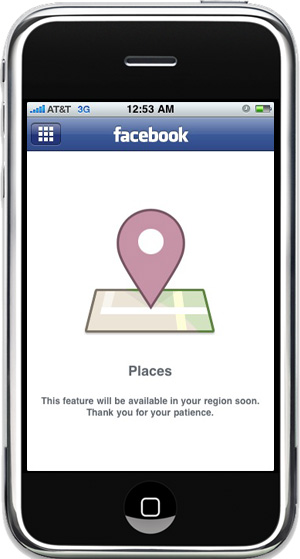 Facebook has officially joined the GPS, location-based, “check-in” game. With the announcement of
  If you haven’t familiarized yourself with foursquare yet, it may be worth your while. Foursquare is gaining popularity quickly. Many businesses are leveraging it to create customer loyalty programs. It’s GPS integrated features allow people to “check-in” when they are at or near your business. This allows you to track frequent visitors. You can structure incentives for your targeted community. For example, if you run a pizza shop, you can offer a free pizza to the member who “checks-in” the most within a given timeframe (month or week). If you have a hair salon, you can give a product away for every 10 check-ins. You can be creative in your offers, but it’s an ideal way to entice potential prospects and reward existing customers.
 Branding, for many companies, is low on their priority list – or perhaps even off the radar screen. Many businesses simply do not give sufficient focus to their brand initiatives. How many times have you heard – branding is too intangible or “if you can’t measure it, you can’t manage it”? Since branding isn’t directly reflected on a company’s balance sheet or financial statements, it’ often overlooked.
 Facebook announced it will simplify their privacy settings for users. After feeling the pressure from large groups of protestors, Facebook founder Mark Zuckerberg said “We needed to simplify controls… We want people to be able to share information in the way that they want.”
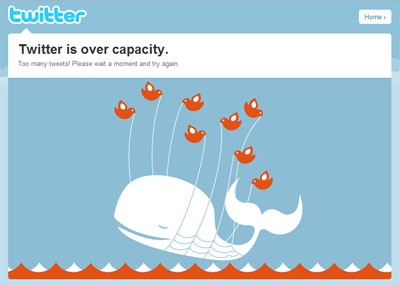 I find it peculiar that every morning this week as I logged into Twitter, I was greeted with this same image – a whale being hoisted out of the water by a bunch of tweety birds. I’ve certainly encountered this image before, but not with the same frequency as this week. I can only assume that this is a good problem for Twitter.